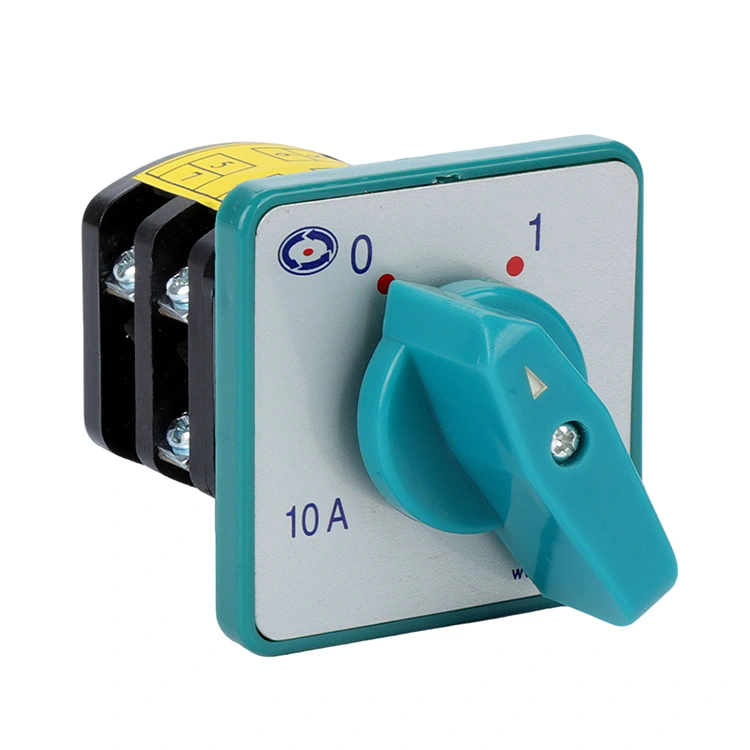
I. Core Definition of a Load Circuit Breaker (LBS)
A load circuit breaker (LBS) is an electrical control component with dual functions of "load switching" and "fault isolation." It is primarily used to safely disconnect circuits under load current, and simultaneously to quickly isolate fault points in the event of overloads, short circuits, or other faults, protecting equipment and personnel. Its core feature is the integration of "on/off control" and "fault protection" functions, enabling both routine operation and emergency disconnection of load circuits without the need for an additional circuit breaker. It is widely used in low-voltage power distribution systems, industrial equipment, and building electrical systems.
II. Core Structure of a Load Circuit Breaker
The structure of a load circuit breaker adds arc-extinguishing and protection mechanisms to the basic changeover switch. The components work together to achieve "load operation" and "fault protection":
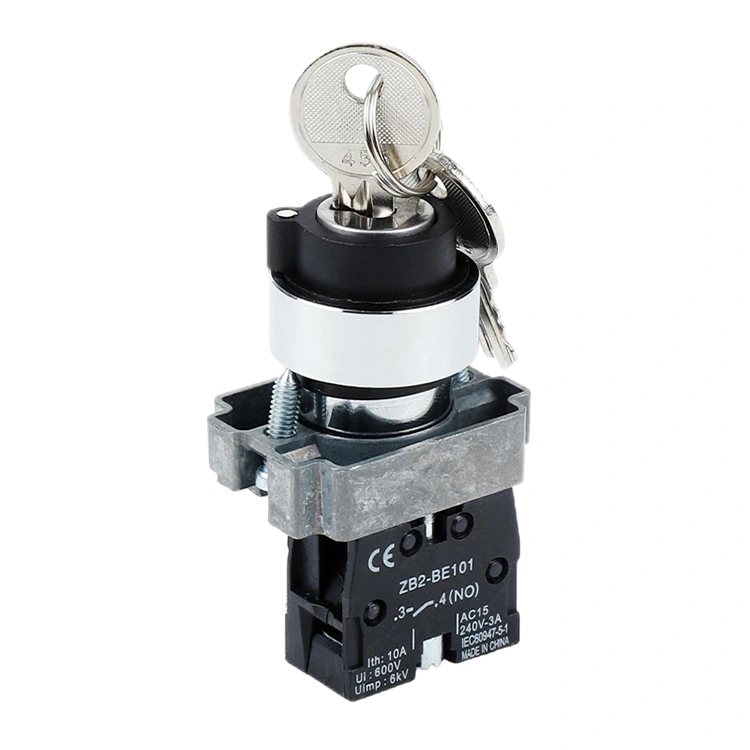
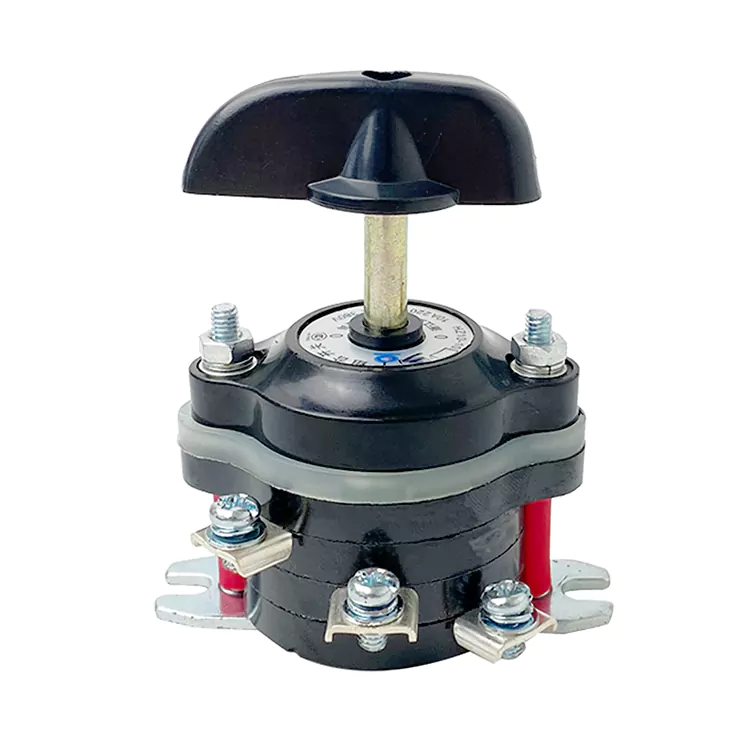
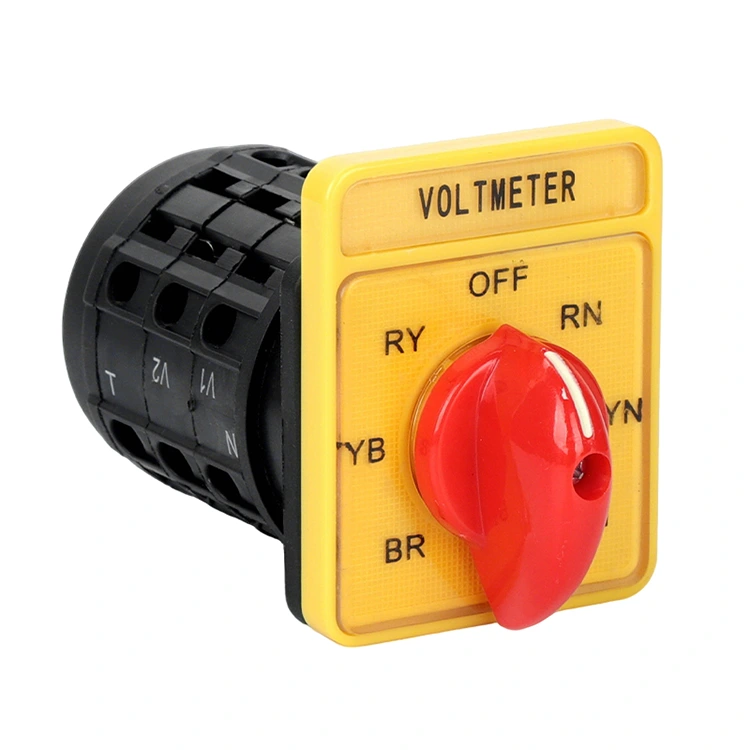
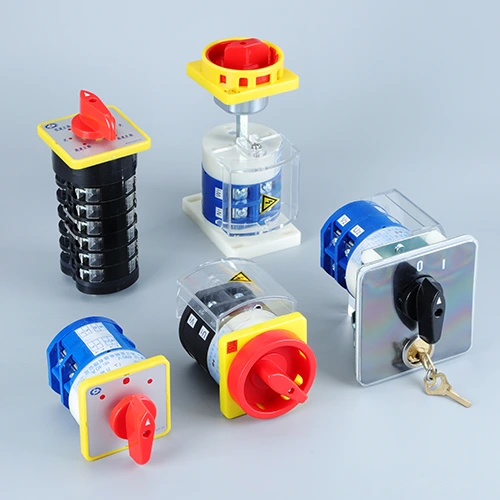
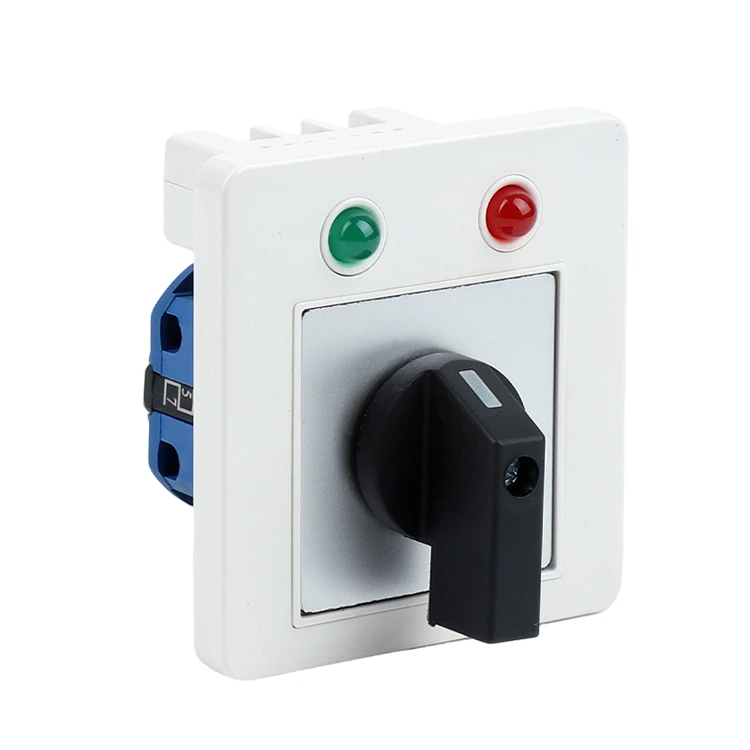
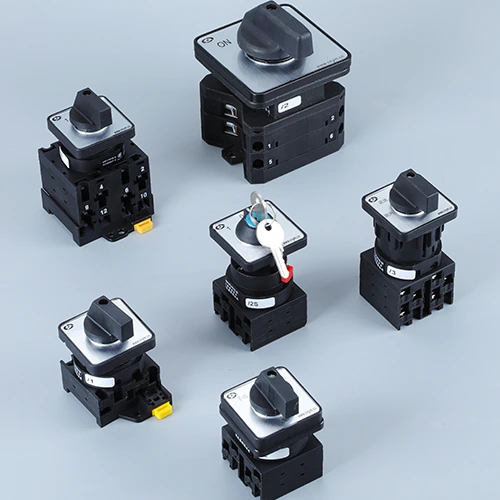
Operating Mechanism: Available in manual (knob, handle) and electric versions, it drives contact action through mechanical transmission. It has "open," "close," and "test" positions. Some models have energy storage operation functions to ensure rapid contact switching.
Contact System: Consists of main contacts and auxiliary contacts. The main contacts are made of arc-resistant, high-conductivity alloy materials (such as silver-tungsten alloy) to carry and interrupt the main circuit load current; auxiliary contacts are used for signal transmission in the control circuit (such as status indication and interlocking control).
Arc extinguishing system: A core auxiliary structure used to extinguish the arc generated when the contacts break (the larger the load current, the stronger the arc). Common forms include arc-extinguishing grids, arc-extinguishing hoods, and magnetic blowout devices, which accelerate arc extinguishing and prevent contact erosion by dividing the arc, cooling the arc, or generating a magnetic field to lengthen the arc.
Protection mechanism: Divided into overload protection and short-circuit protection modules (some models integrate both):
Overload protection: Composed of a bimetallic strip. When overloaded, the bimetallic strip deforms due to heat, pushing the mechanism to trip and disconnect the circuit;
Short-circuit protection: Composed of an electromagnetic trip unit. During a short circuit, a strong current is instantaneously generated, and the electromagnetic force drives the trip unit to trip quickly (response time is typically in the millisecond range).
Positioning and Interlocking Devices: The positioning device ensures clear position and avoids misoperation; the interlocking device (such as mechanical interlocking and electrical interlocking) can be linked with the cabinet door and other equipment to prevent live operation or accidental closing.
Housing and Terminal Blocks: The housing is made of flame-retardant insulating materials (such as reinforced nylon and ceramic), providing protection against electric shock and arc flash; the terminal blocks feature a large cross-section design to meet high current carrying requirements.
III. Core Working Principle of Load Circuit Breaker
The working essence of a load circuit breaker is "load-bearing on/off control + automatic fault isolation," specifically divided into two scenarios: conventional operation and fault protection.
(I) Conventional Load-Bearing On/Off Principle
Closing Operation: The operating mechanism is manually or electrically driven, and the main contacts close quickly through mechanical transmission, while the auxiliary contacts switch synchronously (such as the on/off status indicator). After the main contacts close, the circuit is connected, the load operates normally, and the positioning device locks the closing position.
Opening Operation: The operating mechanism drives the main contacts to separate, at which point the load current generates an arc through the contact gap. The arc-extinguishing system intervenes immediately, dividing the arc through an arc-extinguishing grid and lengthening the arc with a magnetic blower, allowing the arc to cool and extinguish quickly, preventing contact erosion or arcing and fire. Ultimately, the main contacts completely separate, cutting off the circuit.
(II) Fault Protection Working Principle
When an overload or short-circuit fault occurs in the circuit, the protection mechanism automatically triggers a trip:
Overload Protection: When the circuit current continuously exceeds the rated value (e.g., motor stall, excessive load), the bimetallic strip gradually deforms due to the current's thermal effect. When the deformation reaches a threshold, it pushes the tripping mechanism to activate, rapidly disconnecting the main contacts and cutting off the overload circuit. After the fault is cleared, the bimetallic strip cools and resets, allowing manual reclosing to restore operation.
Short-Circuit Protection: When a short circuit occurs, a short-circuit current tens of times the rated value is instantaneously generated. The electromagnetic trip unit instantly engages under the influence of a strong current magnetic field, driving the tripping mechanism to trip rapidly (no delay required). The main contacts separate, and the arc-extinguishing system extinguishes the short-circuit arc, preventing the fault from escalating.
IV. Classification and Typical Applications of Load Circuit Breakers
(I) Common Classifications
By Protection Function:
* Circuit Breaking Only: No overload/short circuit protection; used only for load switching and fault isolation; requires fuses.
* Overload Protection: Integrated overload protection; suitable for scenarios with large load fluctuations (e.g., pumps, fans).
* Comprehensive Protection: Integrated overload + short circuit protection; no additional protection components required; suitable for independent equipment control (e.g., machine tools, main switches in distribution boxes).
By Operation Method:
* Manual Load Circuit Breaker: Operated by a handle/knob; simple structure, low cost; suitable for small equipment or manual control scenarios.
* Electric Load Circuit Breaker: Driven by a motor; can be remotely controlled; suitable for large equipment, automated production lines, or unattended scenarios.
(II) Typical Application Scenarios
Low-voltage power distribution systems: As the main switch for branch circuits, enabling on/off control and fault isolation of load circuits (e.g., floor power distribution in office buildings and factories);
Industrial equipment control: As the main switch for power equipment such as motors, pumps, and compressors, also providing start-up control and overload/short-circuit protection (e.g., main power switches for machine tools, fan control switches);
Building electrical systems: Used for power control of air conditioning systems, lighting circuits, and fire-fighting equipment, ensuring load switching and emergency disconnection;
New energy fields: Used as DC/AC side switches for photovoltaic inverters and energy storage equipment, providing load switching and fault protection functions.
(V)Core Features of Working Principle
*Load-bearing switching capacity: The main contacts and arc-extinguishing system are designed to withstand the switching impact of load current, allowing operation without first disconnecting the load, unlike ordinary transfer switches (which can only switch under no-load or light-load conditions).
*Integrated protection functions: Overload and short-circuit protection can be achieved without additional circuit breakers or fuses, simplifying circuit design.
*Rapid arc extinguishing performance: The arc-extinguishing system ensures rapid extinguishing of the arc upon disconnection, avoiding the risk of electric shock and fire, and adapting to harsh working environments.
*Interlock safety: Mechanical/electrical interlock design prevents misoperation, ensuring equipment and personnel safety, and complying with electrical safety regulations.
*High reliability: Robust mechanical structure and precise response of the protection mechanism, suitable for frequent operation or long-term operation scenarios.
We use cookies to offer you a better browsing experience, analyze site traffic and personalize content. By using this site, you agree to our use of cookies. Privacy Policy